

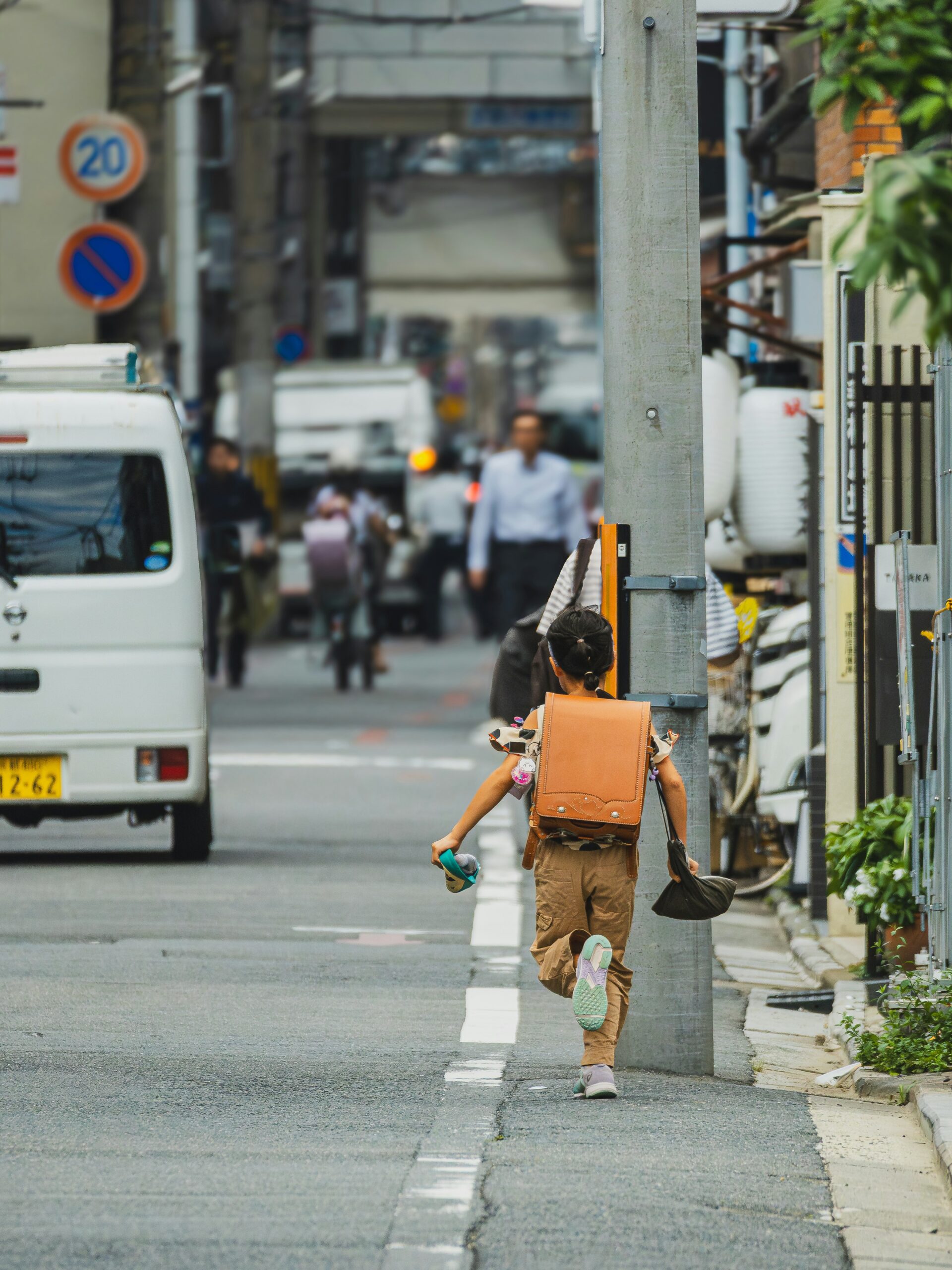



White shoes. White socks. A teacher checking your appearance every single morning. Here’s what school life in Japan is really like, from a local who lived it.
Curious about Japanese school culture? There’s a lot written about it online — but most of it comes from people who studied it, not people who lived it.
I was born and raised in Osaka. I went through the Japanese school system from start to finish: the strict uniform rules, the entrance exam pressure, the weekends at juku. At the time, I assumed this was just what school was like everywhere. It wasn’t until later that I realized how specific — and how fascinating to outsiders — the whole thing was.
The uniform rules — and how seriously they were enforced
In Japan, school uniforms aren’t just clothes — they’re a system. And that system comes with rules that go well beyond “wear this jacket.”
At my middle school in Osaka, the uniform was a gakuran — the traditional black stand-collar jacket that’s been standard in Japanese boys’ schools for generations. But the uniform didn’t stop there. The rules extended to every visible item: white shoes, white socks, no accessories, no modifications. Private clothing of any kind was not permitted on school grounds.
My experience
Every morning, teachers stood at the school entrance and checked each student as they arrived. Not a glance — an actual inspection. White shoes. White socks. Collar straight. If anything was wrong, you were taken to the staff room.
At the time, this felt completely normal to me. It was just how school worked. Looking back, the level of daily enforcement was significant — teachers were stationed at the entrance specifically for this purpose, every single morning, as a routine part of the school day.
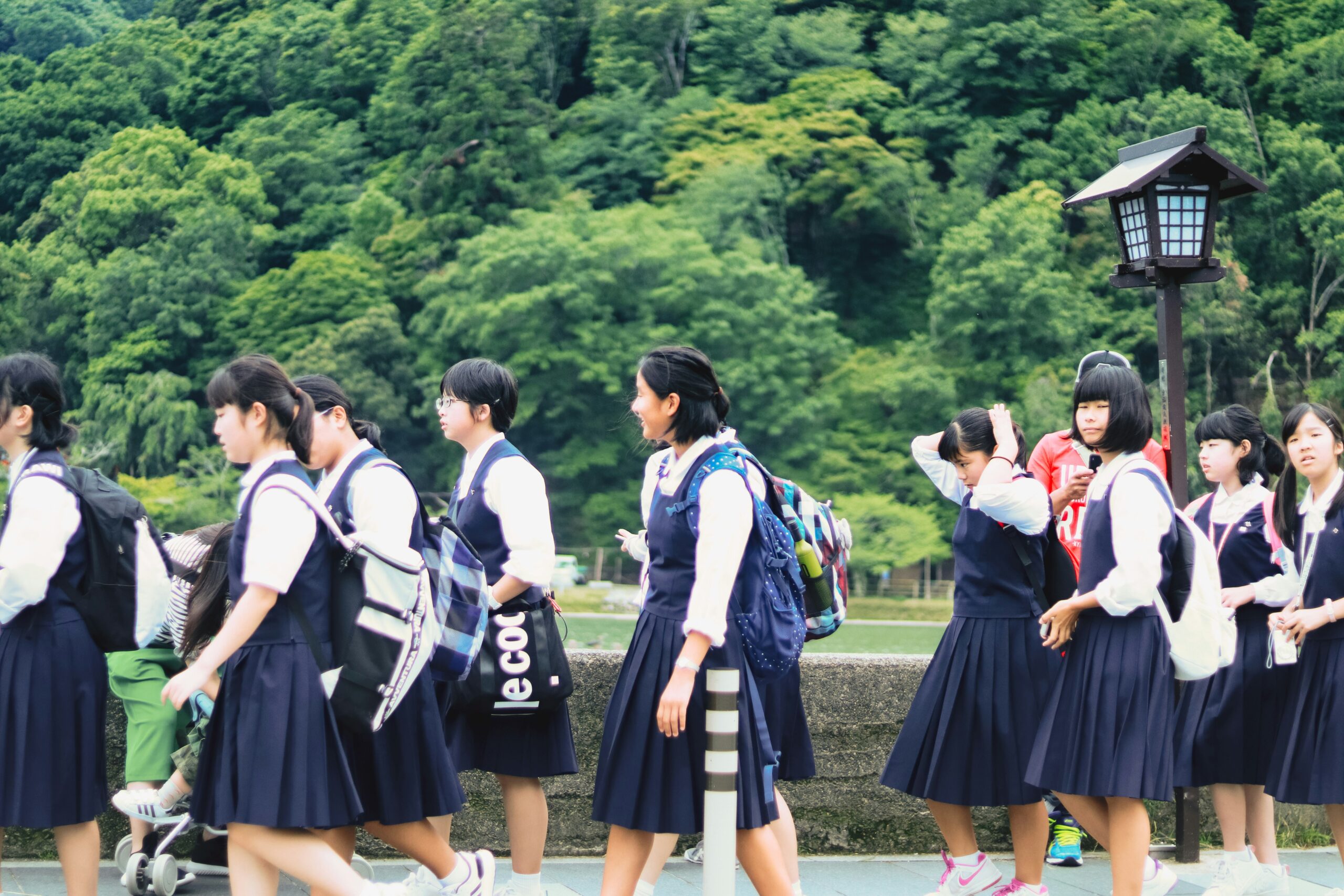
This isn’t unusual for Japan. Uniforms are worn by the majority of middle and high school students across the country, and the accompanying rules vary by school but are consistently taken seriously. The logic behind them is well-established in Japanese educational culture: uniforms reduce visible economic differences between students, signal a shift into “school mode,” and create a sense of collective identity.
Why Japanese uniforms fascinate people abroad
Japanese school uniforms — especially the sailor-style girls’ uniform (seifuku) and the gakuran — have a huge following outside Japan, partly through anime and manga. For many international fans of Japanese culture, the uniform is one of the most recognizable symbols of Japanese school life. The reality of wearing one daily, with morning inspections, is rather less romantic — but also more interesting.
School rules in Japan: what was and wasn’t allowed
Japanese school rules — known as kōsoku — can cover a striking range of things. The specific rules vary widely between schools, but the overall culture of behavioral expectations is distinctly more structured than what many countries have.
Appearance rules
Hair color, hair length, jewelry, makeup, nail polish — commonly regulated and enforced. At many schools, students with naturally lighter or curlier hair have historically been required to submit documentation proving it’s natural. This practice has faced increasing criticism in recent years.
Personal items
Smartphones are often prohibited or must be kept switched off during school hours. Certain schools have detailed rules about what kind of bag is acceptable, what pencil case you can use, and what stationery is permitted.
Behavior outside school
Some schools extend rules to behavior after school hours — where students can go, what they can do while in uniform. This is less common now than it once was, but the concept of the school having a stake in student conduct beyond the school gates remains present.
My experience
When I describe the morning uniform check to people outside Japan, the reaction is usually surprise — not at the rules themselves, but at how routinely and seriously they were applied. It wasn’t a once-a-month thing. It was every day, at the door, before you could enter the building. Teachers weren’t doing it reluctantly. It was just part of how the school ran.
I didn’t think of it as strict at the time. I thought of it as school.
Juku: cram schools and the entrance exam system
One of the most significant — and least visible from the outside — aspects of Japanese education is juku: privately-run cram schools that students attend after regular school hours to prepare for entrance examinations.
50,000+
Juku (cram schools) operating in Japan
Japan Juku Association
50–70%
Of students planning entrance exams who use juku
Japan Juku Association
53%
Of public junior high school students attending juku
Ministry of Education survey
¥10,000–50,000
Monthly juku tuition range per student
Japan Juku Association
Unlike compulsory education, juku is paid for privately by families. Sessions typically run from around 5 PM to 8 or 9 PM on weekdays, plus weekends. The subjects mirror what students are tested on in entrance exams: Japanese, mathematics, English, science, and social studies.
The entrance exam system drives this. In Japan, compulsory free education ends after middle school. High school requires an entrance exam. University requires another. The score you get largely determines where you go — and where you go has a documented effect on employment prospects. The stakes are real, and juku exists to help students compete.
What high school exam preparation actually feels like
The phrase “exam hell” — juken jigoku in Japanese — exists for a reason. The period leading up to high school and university entrance exams is one of the most intense periods of a Japanese student’s life.
My experience
Preparing for the high school entrance exam was genuinely hard. I was attending juku regularly, and weekends weren’t free — they were study days. There wasn’t a particular moment where someone said “this is important.” It was more that everyone around me was doing the same thing, so it just became the rhythm of that period of life.
The thing I remember most is how normal it felt while it was happening. You don’t experience it as extreme pressure — you experience it as your schedule. It’s only afterward, hearing how students in other countries spend their weekends, that the difference becomes clear.
I didn’t resent it at the time. I’m not sure I resent it now. It produced a result. But I also didn’t know there was another way to do it, because I’d never seen one.
Students who fail their target school’s entrance exam face a choice: accept a lower-ranked school, or spend a year studying to retake the exam. These students are known as rōnin — a term borrowed from the historical word for a masterless samurai, now applied to students between schools, waiting for their next attempt.
Other things about Japanese school life that surprised people
When I’ve described my school experience to people outside Japan, a few things consistently get reactions beyond the uniform rules and exams.
Students clean the school themselves
There are no janitors. Students clean their own classrooms, hallways, and bathrooms at the end of each school day. This is standard across Japan and is considered part of education — teaching responsibility and respect for shared space. It was completely normal to me until someone pointed out that it doesn’t happen elsewhere.
School lunch is served in the classroom
In elementary and middle school, lunch isn’t eaten in a cafeteria — students eat in their own classroom, served by classmates on a rotating duty roster. The meal is designed by nutritionists and the same for everyone. You eat what’s served.
Club activities are a serious commitment
After-school club activities (bukatsu) run almost every day, including weekends and school holidays. For many students, the club — whether it’s baseball, calligraphy, or the brass band — consumes as much time as academics. Quitting mid-year carries social weight.
The honest reflection
The thing about growing up inside a system is that you can’t see it clearly until you step outside it. I didn’t think Japanese school culture was strict — I thought it was school. The morning uniform checks, the exam prep, the cleaning duties — none of it registered as unusual because there was nothing to compare it to. The comparison only becomes possible later, and that’s when it gets interesting to think about.
FAQ
- Do all Japanese schools have strict uniform rules?
-
Most middle and high schools in Japan have uniforms, and the accompanying rules vary significantly by school. Some are highly detailed — specifying shoe color, sock color, bag type, and hair length. Others are more relaxed. Public elementary schools typically don’t have uniforms, though some private ones do.
- What is juku and do all Japanese students go?
-
Juku are private after-school cram schools focused on exam preparation and academic tutoring. Around 53% of public junior high school students attend juku, according to Ministry of Education data. It’s common but not universal — and it’s paid for privately, so attendance correlates with family income to some degree.
- How hard is the Japanese high school entrance exam?
-
It varies by school. Top-ranked high schools are genuinely competitive, and preparation typically involves months of intensive study, often with juku support. The exam covers five subjects and takes a full day. The score determines which schools you can realistically apply to, making the stakes feel high for students and families alike.
- Is Japanese school culture changing?
-
Gradually, yes. Rules about hair color and texture have faced criticism and legal challenges. Some schools have revised or abolished rules that were seen as outdated or discriminatory. The pace of change is slow, but the conversation is happening — particularly among younger teachers and parents.
- Why do Japanese students clean their own school?
-
It’s considered part of education rather than a practical task. The practice reflects a broader value in Japanese schooling: that maintaining shared spaces, contributing to the group, and taking responsibility for your environment are things students should learn alongside academics. It’s called sōji jikan — cleaning time — and happens daily.
Looking back, the most striking thing about Japanese school culture isn’t any single rule — it’s how thoroughly normal all of it felt from the inside. The morning inspections, the cram school weekends, the cleaning shifts — none of it seemed unusual because I had no reference point. That’s what makes it worth writing about: the things that feel ordinary to the people living them are often the most interesting to everyone else.
More on everyday life in Japan





コメント