


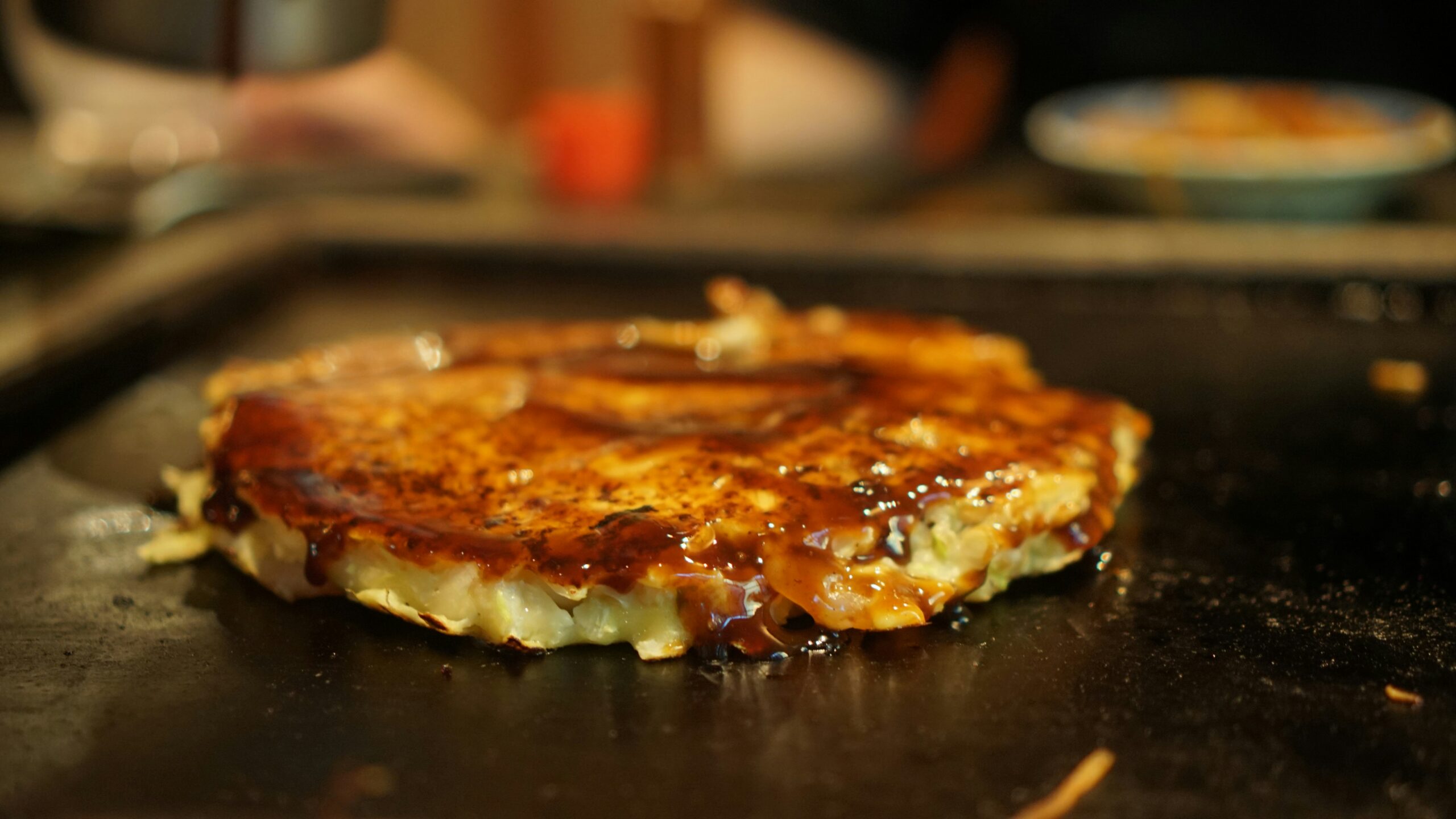
From Tsuruhashi Fugetsu — open for over 70 years — to a Michelin Bib Gourmand legend and a Tabelog Top 100 negiaki specialist. A born-and-raised Osaka local picks the three spots worth your time.
2026 · Written by someone born and raised in Osaka
Looking for the best okonomiyaki in Osaka? There’s no shortage of lists — but most of them were written by people passing through, not people who grew up eating here.
I was born and raised in Osaka. I’ve been eating okonomiyaki my whole life. This guide covers three restaurants near Namba and Umeda that I actually visit — ranging from the most approachable chain in the city to a Michelin-recognized old-school spot to a negiyaki specialist with a cult following. All three are walkable from central Osaka, and you can hit all of them in one day.
Osaka-style vs Hiroshima-style okonomiyaki: what’s the difference?
batter, cabbage, meat, seafood — together before grilling. Hiroshima-style layers them: batter first, then cabbage, then noodles, grilled in separate stages. The textures and flavors are completely different. All three restaurants in this guide serve Osaka-style.
01 Tsuruhashi Fugetsu
70+ years old — the everyday local favorite
Flavor & atmosphere
Tsuruhashi Fugetsu is the okonomiyaki name every person in Osaka knows. Founded over 70 years ago, it has multiple locations around Namba and is the kind of place both tourists and locals walk into without thinking twice.
The signature is generous cabbage in the batter and a slightly sweet house sauce. You watch it cook on the iron griddle in front of you — that’s part of the experience. The most popular order is the chee-tama buta modern: a layered okonomiyaki with melted cheese and egg wrapped around pork and noodles. Rich, filling, and completely satisfying.
Nothing flashy. But the kind of reliable that keeps you coming back. I go regularly.
What people say (Tabelog)
“The chee-tama buta modern is what I order every single time. I can’t stop.”
“Watching it cook right in front of you makes it taste better somehow.”
“Reasonably priced and easy to walk into — exactly what I needed.”
A local’s honest take
From someone born and raised here
Some locals dismiss Fugetsu as a tourist chain. But the truth is, we eat here too. It’s not where you go on a special occasion — it’s where you go when you’re in the mood for okonomiyaki and don’t want to think about it. Multiple locations in Namba means it’s always within reach.
The price is fair, the solo seating is easy, and the barrier to entry is low. If it’s your first time eating okonomiyaki in Osaka, this is the most approachable starting point.
The basics
Location
Namba / Dotonbori area, multiple locations
Price
From ¥870 (buta-dama)
Best for
First-timers, anyone who wants a reliable, approachable entry point
02 Kiji Honten
Founded 1954 — Michelin Bib Gourmand, Showa-era atmosphere
Flavor & atmosphere
Walk through the narrow alley of Shin-Umeda Shokudo-gai and you’ll smell it before you see it — the faint char of sauce on a hot iron griddle. Follow it and you’ll find Kiji Honten.
Seven counter seats and four table seats. Founded in 1954, the atmosphere hasn’t changed much since. The okonomiyaki uses yamaimo (mountain yam) for a batter that’s soft, almost molten inside, with a properly crisped exterior. Simple ingredients, nothing unnecessary. It’s the kind of dish that makes you want another before you’ve finished the first. Michelin Bib Gourmand selected, consecutively since 2015.
What people say (Tabelog)
“Worth the wait every time. That texture doesn’t exist anywhere else.”
“Watching it cook at the counter makes the whole experience.”
“The Showa atmosphere is exactly what Osaka used to feel like.”
A local’s honest take
From someone born and raised here
If Fugetsu is the everyday version, Kiji is the one you take someone to when you want to show them something real. Shin-Umeda Shokudo-gai is one of the few places in Osaka that still feels like the city used to — narrow, lived-in, unhurried. Kiji fits perfectly. Close enough to Umeda station to be convenient, but worth going out of your way for.
The basics
Location
Umeda — Shin-Umeda Shokudo-gai
Price
Around ¥1,000–1,500
Best for
Anyone who wants authentic flavor and old Osaka atmosphere
03 Fukutaro Honten
Negiyaki specialist — Tabelog Top 100
Flavor & atmosphere
Fukutaro’s specialty is negiyaki — a variation that uses massive amounts of green onion instead of cabbage, cooked slowly to draw out the natural sweetness. It’s finished with a soy-based sauce rather than the usual sweet okonomiyaki sauce. The result is something lighter and more savory than standard okonomiyaki — different enough that it feels like a separate dish entirely.
If you’re ordering for the first time, get the buta negiyaki (pork negiyaki). The ingredients come directly from Osaka Central Wholesale Market — the quality shows. Tabelog Top 100 selected.
What people say (Tabelog)
“I’d never heard of negiyaki before this. It’s in a completely different league.”
“They take your order while you’re waiting in line — the turnover is faster than it looks.”
“Lighter than okonomiyaki. I could eat several without feeling heavy.”
A local’s honest take
From someone born and raised here
Fukutaro is in the “Ura-Namba” area — just far enough from the Dotonbori crowds to feel like a local place. The sequence I’d recommend: start at Fugetsu to get a feel for standard Osaka okonomiyaki, then come here for negiyaki. The contrast makes both dishes more interesting. If someone tells me they want to understand Kansai food, this is one of the first places I bring them.
The basics
Location
Namba — Ura-Namba area
Price
Around ¥1,500–2,500
Best for
Anyone wanting to try negiyaki for the first time
Side-by-side comparison
| Restaurant | Style | Price | Best for | Tabelog |
|---|---|---|---|---|
| Tsuruhashi Fugetsu | Classic, accessible chain | ¥870~ | First-timers, easy entry | View → |
| Kiji Honten | Old-school, Michelin-elected | ¥1,000~ | Authentic flavor, tmosphere | View → |
| Fukutaro Honten | Negiyaki specialist, Top 100 | ¥1,500~ | Negiyaki first-timers | View → |
FAQ
- What is okonomiyaki and how is it different from other Japanese pancakes?
-
Okonomiyaki is a savory Japanese pancake made with a flour-based batter, shredded cabbage, egg, and various fillings like pork, seafood, or cheese. Unlike sweet pancakes, it’s grilled on an iron plate and finished with savory toppings: okonomiyaki sauce, Japanese mayo, bonito flakes, and green seaweed. The name roughly means “grilled as you like it.”
- What is negiyaki and how is it different from okonomiyaki?
-
Negiyaki replaces the cabbage with a large amount of green onion (negi), giving it a lighter, more savory flavor. It’s typically finished with soy-based sauce rather than sweet okonomiyaki sauce, and the texture is softer and thinner. Once you’ve tried both, they feel like completely different dishes — even though they’re made by the same restaurants.
- How much does okonomiyaki cost in Osaka?
-
Expect to pay ¥870–2,500 per person depending on the restaurant and what you order. Tsuruhashi Fugetsu starts at ¥870 for a basic buta-dama. Higher-end spots like Fukutaro run ¥1,500–2,500. One okonomiyaki is usually filling enough for one person as a meal.
- Do you cook okonomiyaki yourself or does the staff cook it?
-
It depends on the restaurant. Most well-known Osaka okonomiyaki spots — including all three in this guide — have staff cook and serve it to you. Self-cooking options exist but are less common at established restaurants. If you want to cook your own, look for places that explicitly offer a “self-grill” setup.
- Should I try takoyaki or okonomiyaki first in Osaka?
-
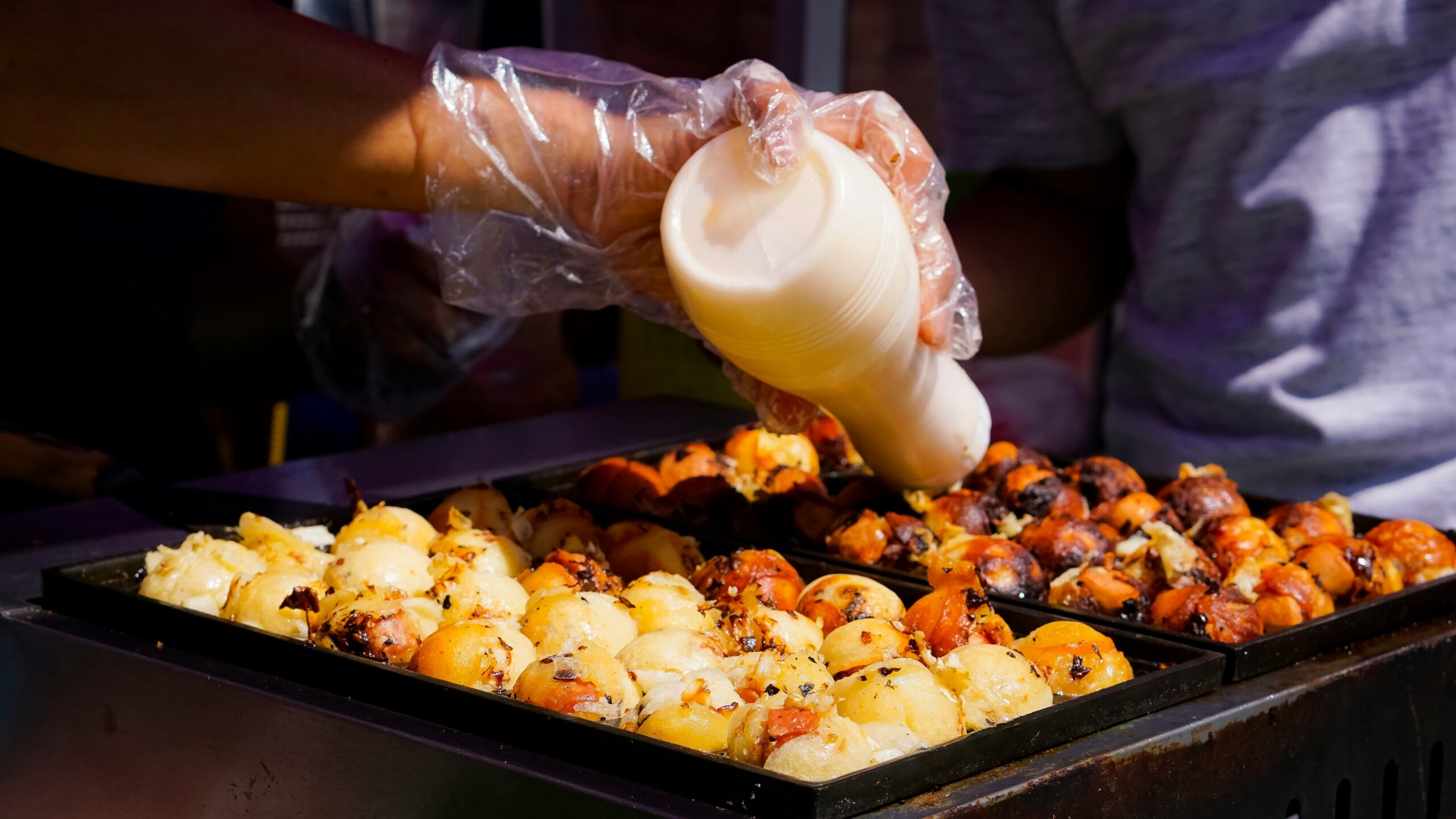
Takoyaki is easier to try first — you can buy it standing up from street stalls or small shops throughout Namba without committing to a sit-down meal. Okonomiyaki is more of a restaurant experience. A natural flow: grab takoyaki while walking around Dotonbori, then sit down for okonomiyaki when you’re ready for something more substantial.
- Is Tsuruhashi Fugetsu worth it or is it just a tourist trap?
-
It’s worth it. The “tourist trap” reputation comes from its multiple locations and high visibility — but the food is genuinely good, the price is fair, and locals eat there regularly. It’s not the most atmospheric option, but it’s the most consistent and accessible. A solid first okonomiyaki experience.
Each of these three restaurants represents a different side of Osaka’s okonomiyaki culture. Fugetsu is the everyday version — accessible, reliable, no fuss. Kiji is the old-school version — small, atmospheric, worth a wait. Fukutaro is the specialist’s version — negiyaki as a serious dish, not an afterthought. Which one you prefer comes down to what you’re after. The best way to find out is to try all three.
More Osaka food guides




コメント